

Control Arm Upgrades: The Suspension Mod That Actually Changes How Your Car Drives
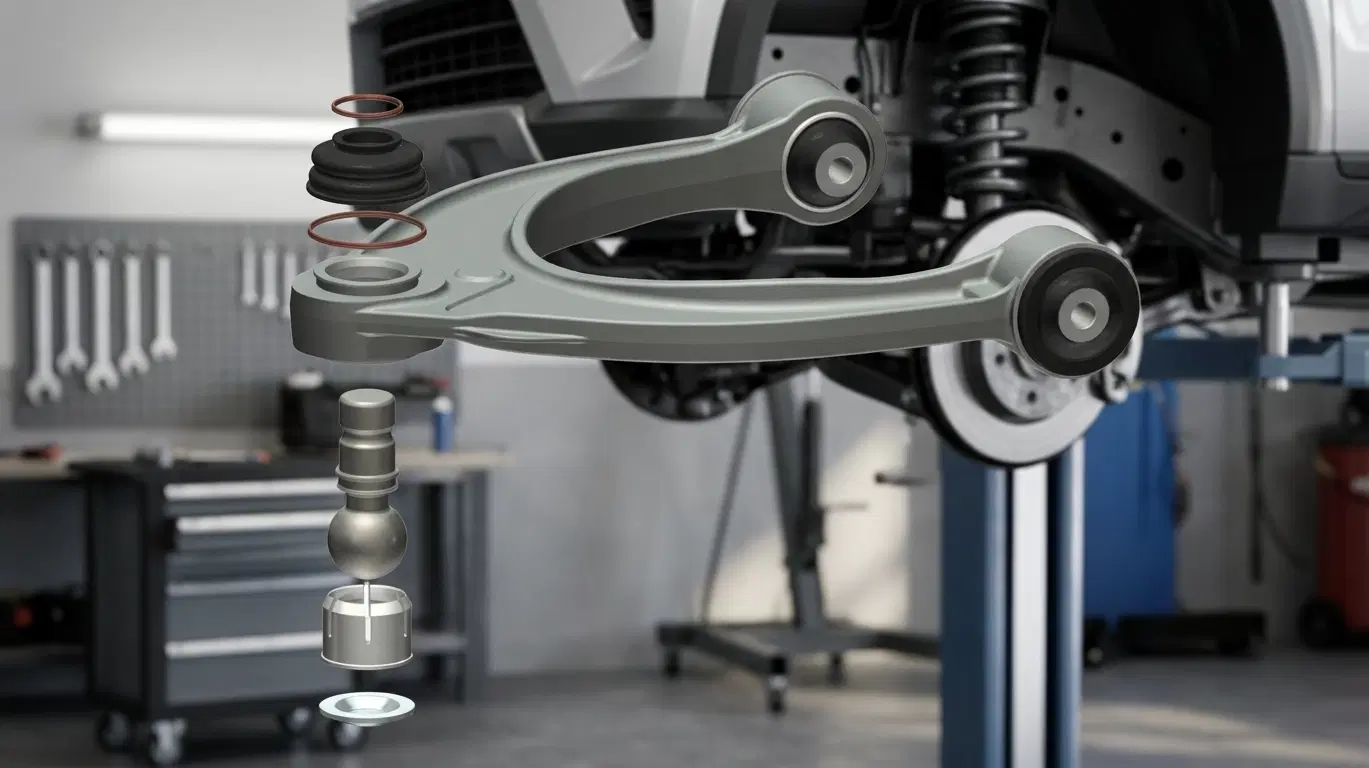
Most enthusiasts chase power first — bigger turbos, upgraded exhausts, tuned ECUs. But if your suspension geometry is fighting you through every corner, none of that power translates into actual lap time or driving enjoyment.
An upgraded control arm is one of the few chassis modifications that fundamentally changes how a car feels to drive.
What Does an Upgraded Control Arm Actually Change?
The control arm is the pivoting link between your wheel hub and the chassis. On a stock car, it's engineered for compliance — soft bushings, conservative geometry, and wide tolerance ranges that prioritize ride comfort and noise isolation over precision.
An aftermarket performance control arm flips those priorities.
- Stiffer bushings reduce deflection under load, keeping the wheel stable under cornering forces.
- Stronger construction (forged aluminum or chromoly steel) reduces flex under hard driving.
- Adjustability allows camber, caster, and toe correction that stock arms cannot provide.
The result is immediate, predictable response in all driving conditions.
Who Actually Benefits From This Upgrade?
Before choosing a setup, be honest about how you drive:
- Track days or autocross where consistency matters
- Aggressive mountain road driving with frequent hard cornering
- Lowered cars needing geometry correction
- Dedicated performance or time attack builds
If any of these apply, a control arm upgrade can deliver a noticeable improvement.
Lowered vehicles benefit the most, since ride height changes often push suspension geometry outside factory design limits.
What to Look For in a Performance Control Arm
Adjustability
Look for:
- Eccentric bolts
- Rod ends
- Turnbuckle-style adjusters
These allow precise geometry tuning. Fixed arms improve stiffness but limit tuning flexibility.
Bushing Type
Rubber
- Comfortable
- OEM-like refinement
- Lowest performance potential
Polyurethane
- Balanced upgrade
- Better stiffness with acceptable street comfort
Pillow-ball (spherical bearings)
- Maximum precision
- Zero deflection
- Best for track use, worst for NVH
Material
Forged aluminum
- Lightweight
- Improves steering response
Chromoly steel
- Maximum strength
- Ideal for high-load racing use
Avoid cast arms
- More prone to flex and failure under stress
Clearance Considerations
Check compatibility with:
- Big brake kits
- Wide wheel setups
Some arms are designed specifically to avoid clearance issues.
Common Mistakes That Reduce Performance Gains
1. Not aligning the car properly
Installing adjustable arms without proper alignment eliminates most of the benefit. Geometry setup is where the performance is.
2. Mixing with worn suspension components
Old ball joints or tie rods will cancel out the precision gained from new control arms.
3. Ignoring suspension tuning as a system
Control arm geometry affects load transfer and changes how springs and dampers behave. Everything must be tuned together.
Conclusion
Horsepower gets attention, but geometry wins corners.
A control arm upgrade provides:
- More precise wheel control
- Better load consistency
- Sharper steering response
- More predictable handling
Choose the right material, prioritize adjustability if lowered, and ensure proper alignment after installation.
Looking for High-Performance Suspension Parts?
Explore our full range of professional automotive solutions on our official online store.
Shop Fotado Parts